Plan a Museum Visit Around the Route You Want to Take
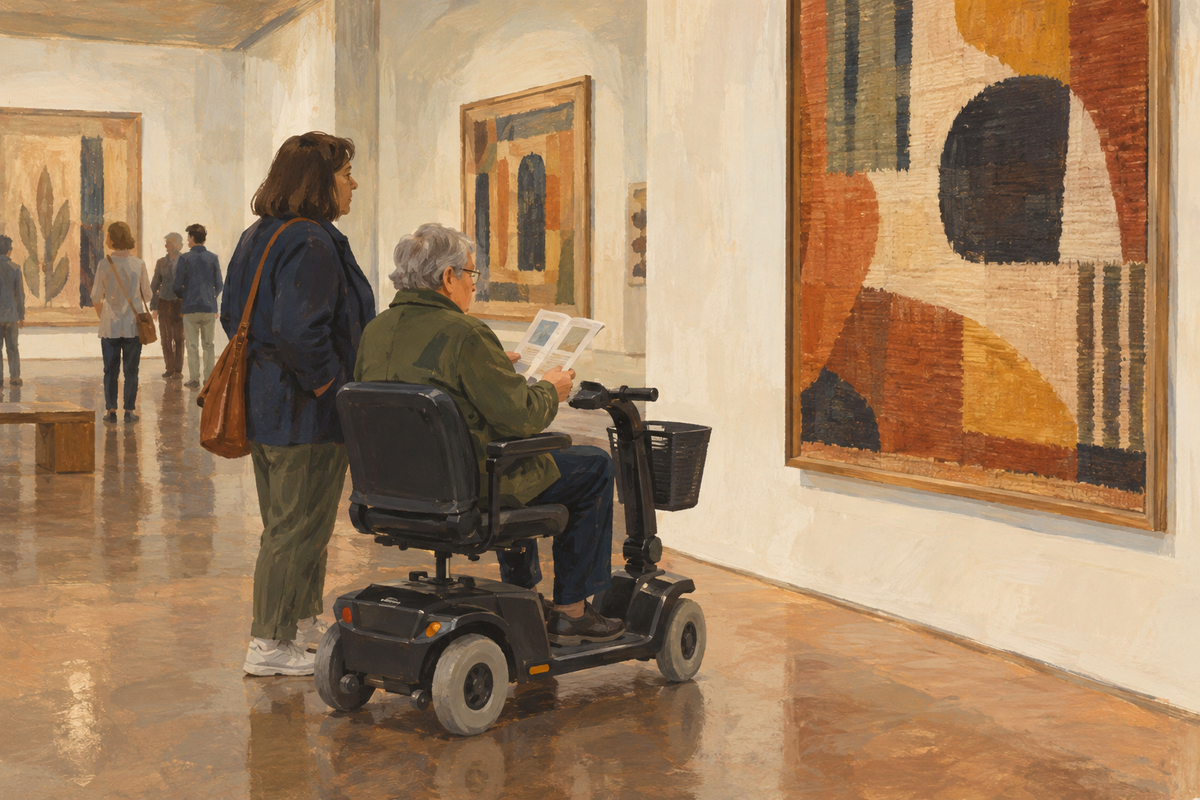
For a museum visit with a mobility scooter, start with the exhibition you most want to see and work outward: entrance, route to the gallery, restroom, a pause, and the way back out. We suggest writing that short journey down before adding a second exhibition. An accessible doorway is one part of the outing; your plan needs to connect the places you actually intend to use.
This AVINO E-Trike guide is a visit-planning exercise, not a statement that a particular scooter will fit every museum. The illustrations are editorial concepts, not maps of a real building or images of a retail model.

Give the museum a route to answer
Instead of asking only “Are you accessible?”, try a message like this:
“I will be visiting with a mobility scooter. I want to see the textile gallery, use a restroom, and leave through the same entrance. Which step-free route should I follow? Does it use a lift, and are there any closures affecting that route on my visit date?”
The textile gallery in this example is fictional. Replace it with the exact exhibition name on your chosen museum's website. If staff need your scooter's dimensions, copy them from its documentation and say whether they describe the scooter in use or folded. Do not send a folded measurement as though it were the space you occupy while riding.
Our suggested planning order is deliberately small: one priority, one route, one optional extension. This leaves you with a useful outing even if you decide against the extra floor.
Read the details behind an accessibility statement
A concrete example is the Smithsonian National Museum of Natural History's visitor page. It says its entrances and exits are accessible, public floors can be reached by elevator, and exhibitions are accessible by wheelchair. It also identifies family/companion care restrooms on the first floor and says loan manual wheelchairs are limited and available on a first-come basis.
Those are that museum's statements, not promises about another venue or a specific scooter. The same page uses “scooters” in both its mobility-device information and a list of prohibited recreational items. If wording on your destination's site seems ambiguous, identify your device as a mobility aid and request clarification rather than guessing from the word alone.
Make a main route and an optional route
For an imagined two-floor museum, our draft plan might read: entrance, information desk, ground-floor gallery, restroom, exit. The upstairs gallery is optional until the lift route is confirmed. This is an editorial planning example, not a tested itinerary.
Put the optional stop on a separate line. That small formatting choice gives you a clear decision point: continue, pause, or leave. Agree on that point with anyone visiting alongside you, especially if their list of must-see exhibits is longer than yours.
For a temporary closure, ask staff which of your planned stops remain reachable. A useful reply would name the alternative route; “the museum is open” does not answer your route question.
Keep the return leg in the plan
Add the exact pickup point or onward destination to your note. If someone is collecting you, send them the same entrance name you have recorded, rather than simply the museum's name.
Save the museum's reply and a current map together. On arrival, show staff your short route and ask about changes. You can then spend the visit deciding what interests you, instead of trying to reconstruct an itinerary from several separate accessibility pages.